در هیاهوی این جهان، گاهی زیباترین نیایش، سکوت است. قلبت را به روی لحظه حال بگشا و اجازه بده نور حقیقت از میان شکافهای روحت به درون بتابد. ما به این دنیا نیامدهایم تا فقط زنده بمانیم، آمدهایم تا شکوهِ حضور را در هر دم و بازدم لمس کنیم. به یاد داشته باش، آنچه در جستجوی آنی، خود در جستجوی توست.
In the midst of the world’s clamor, sometimes the most beautiful prayer is silence. Open your heart to the present moment and let the light of truth shine through the cracks of your soul. We didn’t come into this world merely to survive; we came to experience the grandeur of presence in every breath. Remember, what you are seeking is seeking you
هیچچیز در نظام خلقت گم نمیشود ;Nothing is Ever Lost in the Divine Order
We must be aware that everything we do is recorded within the cosmic order, and nothing is ever lost. If you do good, your kindness is seen and will be rewarded at the right time. Conversely, if you do wrong, it will never go unanswered. Every action has a reaction, and in the extraordinarily intelligent system of the universe, nothing ever fades away or goes missing.
باید آگاه باشیم که هر آنچه انجام میدهیم در نظام هستی ثبت و ضبط میگردد و هیچچیز گم نمیشود. اگر نیکی کنید، خوبیِ شما دیده میشود و در زمانِ درست، پاداش آن را خواهید گرفت؛ و اگر بدی کنید، هرگز بیجواب نمیماند. چرا که هر عملی، عکسالعملی دارد و در نظام فوقالعاده هوشمند هستی، هیچچیز مفقود یا زایل نمیشود
Have you ever witnessed the “Law of Return” in your own life? Share your story in the comments below!
ایا تا به حال شاهد “قانون بازگشت” (کارما) در زندگی خود بودهاید؟ داستان یا تجربهتان را زیر همین پست با ما به اشتراک بگذارید!»
عبور از تاریکی به سوی نور
در این روزهایی که بسیاری از افراد لبریز از ترس، نگرانی، افسردگی و انرژیهای منفی هستند، شاید گفتنش سخت باشد اما حقیقت این است: همینها دقیقاً همان دلایلی هستند که مانع ارتقا، رشد و رسیدن شما به «نور» میشوند.
برای اینکه بتوانید در مسیر معنوی و روحی پیشرفت کنید، باید از هر آنچه بار منفی دارد فاصله بگیرید. ترسها را کنار بگذارید، نگران هیچچیز نباشید و تمام تمرکزتان را بر زندگی شخصی و ارتقای روحتان بگذارید.
((((اما چگونه)))
با اعتماد و ایمان قلبی به پروردگار؛ خدایی که همه چیز تحت کنترل اوست و به نظام هستی که کاملاً هوشمندانه عمل میکند. باید متوجه شوید که من و شما، ما انسانها، فراتر از این جسم مادی هستیم که میبینیم؛ ما بخشی از «منبع اصلی» هستیم. ما تجلی کل هستیم و نباید خودمان را در محدودیتها حبس کنیم.
From Darkness to the Light
In these days, when so many are overwhelmed by fear, anxiety, depression, and negative energies, it is difficult yet necessary to say: these are the very obstacles preventing your elevation, growth, and journey toward the Light.
To achieve spiritual and soulful progress, you must distance yourself from anything carrying a negative vibration. Cast aside your fears, stop worrying, and instead, focus on your personal well-being and the evolution of your soul.
How is this possible?
Through absolute trust and faith in the Divine—the Creator who is in total control—and in the cosmic order, which is perfectly intelligent. You must realize that you and I, as human beings, are not merely what we see in the mirror. We are everything. We are a part of the Divine source, and we must never limit ourselves.
بزرگترین «ترسی» که امروز آمادهاید به خاطر ارتقای روحتان کنار بگذارید چیست؟
بیایید با هم در این فضای امن، نیت کنیم تا از محدودیتها فراتر برویم.
What is the biggest “fear” you are ready to let go of today for your spiritual growth? Let’s set an intention together in this safe place.
Comment it for me please
Freedom and liberty are a right for all.

God Is Love
خدا با ماست
وقتی خدا با ماست ،چه کسی میتواند بر ضد ما باشد؟
من قدرتم را از خداوندی میگیرم که خالق اسمانها و زمین و تمام مخلوقات است.
من عاشق خداوندی هستم که در درونم ساکن است.
من خداوندی را ستایش و پرستش میکنم که مرا بارها و بارها از خاکستر بلند کرد و زندگی بخشید،من مرده بودم،من تاب نداشتم،من بودم و یک دست لباس تنم،خسته و رنجور و بی پناه و درمانده ،اما او به من قدرت داد،توان داد و مرا بلند کردو گفت یادت باشد،الماس زمانی الماس میشورد که حسابی تراش بخورد،
من پس از مردن در خودم و در زندگی فیزیکی و ماده و تعلقات ،دوباره از روح با قدرتی دوباره ،زنده شدم و شروع کردم به ساختن هر انچه قبلا ساخته بودم و ویران شده بود اما این دفعه بهتر و بهتر
بار دیگر از دست رفت چون باید به سفری دیگر میرفتم و با تمام تعلقات خداحافظی میکردم
و بار دیگر…
God is with us.
When God is with us, who can be against us?
I draw my strength from the Lord, the Creator of the heavens, the earth, and all creatures. I am in love with the Divine who dwells within me.
I praise and worship the God who, time and time again, raised me from the ashes and breathed life into me. I was dead; I had no endurance left. It was just me and the clothes on my back—weary, suffering, defenseless, and helpless.
But He gave me power, He gave me strength, and He lifted me up, saying: “Remember, a diamond only becomes a diamond after it is heavily cut and polished.”
After dying to myself, to physical life, to matter and attachments, I was born again from the Spirit with a renewed power. I began to rebuild everything I had built before that had been destroyed—but this time, better and stronger.
Once more, it was lost, for I had to embark on another journey and say goodbye to all attachments.
And once again

MicroPython
Recently, Python Testbed for Federated Learning Algorithms emerged as a low code and generative large language models amenable framework for developing decentralized and distributed applications, primarily targeting edge systems, by nonprofessional programmers with the help of emerging artificial intelligence tools. This light framework is written in pure Python to be easy to install and to fit into a small IoT memory. It supports formally verified generic centralized and decentralized federated learning algorithms, as well as the peer-to-peer data exchange used in time division multiplexing communication, and its current main limitation is that all the application instances can run only on a single PC. This paper presents the MicroPyton Testbed for Federated Learning Algorithms, the new framework that overcomes its predecessor’s limitation such that individual application instances may run on different network nodes like PCs and IoTs, primarily in edge systems. The new framework carries on the pure Python ideal, is based on asynchronous I/O abstractions, and runs on MicroPython, and therefore is a great match for IoTs and devices in edge systems. The new framework was experimentally validated on a wireless network comprising PCs and Raspberry Pi Pico W boards, by using application examples originally developed for the predecessor framework.
business Computing
business computing, you will learn how computing and information systems fit into business structures and functions, and how computer systems are developed.
Business Computing and IT course is a perfect choice for those who want the ability to form a bridge between the fields of technology and business. Over four years, the course will mould you into a future ICT practitioner equipped with a good range of relevant technical skills and great knowledge of business systems and structures.
What can I do with a BSc Business Computing?
On successfully graduating from this BSc Business Computing, you will have gained an array of important transferable skills, including in: project management and organisational skills. database development. If you are ambitious to study further, you may progress from this course to our MSc Advanced Computing or MSc Computer Science.
benefits of eating vegetables
Adriana

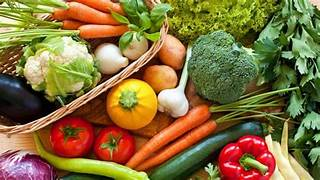
Vegetables are among the healthiest and most nourishing foods, as you may already be aware. They contain a lot of fiber, a kind of carbohydrate that facilitates digestion. Because fiber slows down how quickly your body digests meals, it keeps blood sugar levels constant and helps you feel full for longer. 8. Vegetables are rich in nutrients.
stay healthy!!!
Past or Future
look at the picture!!!

The image on the left, with its weathered stone and worn steps leading to a mysterious doorway, evokes a sense of history, of a world long past. It’s a place that has witnessed countless stories and held secrets for centuries. I imagine a group of archaeologists carefully excavating the site, piece by piece, to understand the lives of those who came before us. This discovery is a journey into the past, a reconstruction of forgotten knowledge.
The image on the right, an astronaut floating in the blackness of space, represents the cutting edge of human endeavor. The intricate details of the spacesuit and the reflection in the helmet visor speak of advanced technology and the boundless human spirit of exploration. This discovery is a leap into the unknown, a search for new frontiers and a deeper understanding of our place in the cosmos.
When you see the past, symbolized by the ancient ruins, you realize it is a fixed point in time. We can study it and learn from it, but we can never change or return to it. It’s a reminder that every moment we experience is fleeting and will soon become a part of that unchangeable history.
Similarly, when you look at the future, represented by the astronaut venturing into the unknown, you are faced with uncertainty. The future is a realm of possibilities, but also one of unpredictable outcomes. We can plan for it and dream about it, but we can never truly know it until it arrives.
I think!!!!!!!
In my opinion the present is the only time we have. It’s the only moment where we can act, make choices, and have a tangible impact. The present is where we apply the lessons from the past and lay the groundwork for the future.
can you give me your opinion after reading my opinion.
Robotics with AI
The combination of robotics and Artificial Intelligence (AI) is transforming various industries and aspects of daily life. AI significantly enhances a robot’s capabilities, moving them beyond pre-programmed tasks to intelligent, adaptive, and autonomous systems.
Here are some key aspects of robotics with AI:
1. Enhanced Capabilities through AI:
Perception and Understanding: AI, particularly computer vision, allows robots to “see” and interpret their surroundings. They can recognize objects, identify obstacles, understand complex scenes, and even analyse human emotions through facial expressions and tone of voice. This is crucial for navigation, object manipulation, and safe interaction.
Navigation and Autonomous Decision-Making: AI enables robots to independently navigate complex environments, making real-time decisions based on sensor data (cameras, LiDAR, ultrasonic sensors). They can adapt to dynamic conditions, predict the movement of dynamic obstacles, and adjust their paths accordingly.
Learning and Adaptation: Machine learning (ML) and deep learning (DL) empower robots to learn from experience. They can analyse data, identify patterns, and refine their actions over time, continuously improving performance without explicit reprogramming. This is evident in tasks like assembly, quality control, and even in optimizing fleet movements for logistics (e.g., Amazon’s DeepFleet).
Human-Robot Interaction (HRI): AI, especially Natural Language Processing (NLP) and generative AI, allows robots to understand and respond to human speech and gestures. This facilitates more intuitive and collaborative interactions, making robots safer and more effective when working alongside humans (cobots).
Complex Task Execution: AI allows robots to perform highly detailed and intricate tasks that would be impossible with traditional coding. This includes precise surgical procedures, delicate object manipulation, and inspection for defects.
2. Applications of AI in Robotics:
AI-powered robots are being deployed across a wide range of sectors:
Manufacturing: From automated assembly and quality control to welding and material handling, AI robots boost productivity, efficiency, and accuracy. Collaborative robots (cobots) work safely alongside human workers.
Logistics and Warehousing: Autonomous mobile robots (AMRs) powered by AI navigate warehouses, transport goods, and optimize routes, leading to faster delivery and reduced operational costs.
Healthcare: Robots assist in precise surgical procedures, provide patient care and rehabilitation, monitor health conditions, and even deliver medicine to remote areas (e.g., drones).
Agriculture: AI robots can accurately weed, fertilize, tackle disease, and harvest crops, even delicate ones like strawberries, while collecting detailed farm data.
Exploration and Hazardous Environments: Robots can operate in dangerous or inaccessible areas, such as inspecting infrastructure, assisting in disaster relief (e.g., “vine robots” for search and rescue), or monitoring high-risk industrial sites.
Autonomous Vehicles: Self-driving cars heavily rely on AI for perception, navigation, and decision-making in complex traffic environments.
Service and Entertainment: Robots are appearing in customer service roles, entertainment, and even as companions in smart homes.
3. Future Trends:
The future of AI in robotics promises even more advanced and autonomous systems:
Physical AI: Robots will increasingly train themselves in virtual environments and learn from experience, leading to more adaptable and robust systems. This is akin to a “ChatGPT moment” for physical robotics.
Artificial General Intelligence (AGI): While still a long-term goal, AGI aims for robots to possess human-like intelligence, capable of learning from experience and applying knowledge across entirely new situations.
Neuromorphic Computing & Brain-Machine Interfaces: These technologies could make robots more energy-efficient, adaptable, and capable of advanced decision-making, potentially seamlessly integrating AI with human cognition.
Embodied AI: Combining perception, reasoning, and movement, embodied AI will lead to more interactive and versatile robotic assistants.
Cloud Robotics: Robots will increasingly leverage vast AI models and real-time data from the cloud for improved learning and performance.
Advanced Humanoid Robots: With continuous advancements in AI, humanoid robots will become more intelligent, responsive, and versatile, finding applications in various fields from social care to industrial tasks.
4. Ethical Considerations:
The rapid advancement of AI in robotics also brings important ethical considerations:
Job Displacement: Automation of tasks by AI robots could lead to job losses, particularly in repetitive or easily automated sectors.
Safety and Security: Malfunctioning or poorly designed robots pose risks to human safety. Ensuring robust safety protocols and cybersecurity is paramount.
Accountability and Responsibility: Determining who is responsible when an AI-powered robot makes a mistake or causes harm is a complex legal and ethical challenge.
Bias and Fairness: AI systems are trained on data, and if that data is biased, the robot’s decisions can perpetuate or even amplify those biases. Ensuring diverse and representative training data is crucial.
Privacy and Data Protection: Robots collect vast amounts of data about their environment and human interactions, raising concerns about privacy and how this data is managed and secured.
Human Oversight and Autonomy: It’s important to ensure that AI systems do not displace ultimate human responsibility and accountability, and that robots respect human autonomy.
Social Isolation and Dehumanization: Over-reliance on social robots, particularly among vulnerable populations, could potentially exacerbate social isolation or lead to a dehumanization of care.