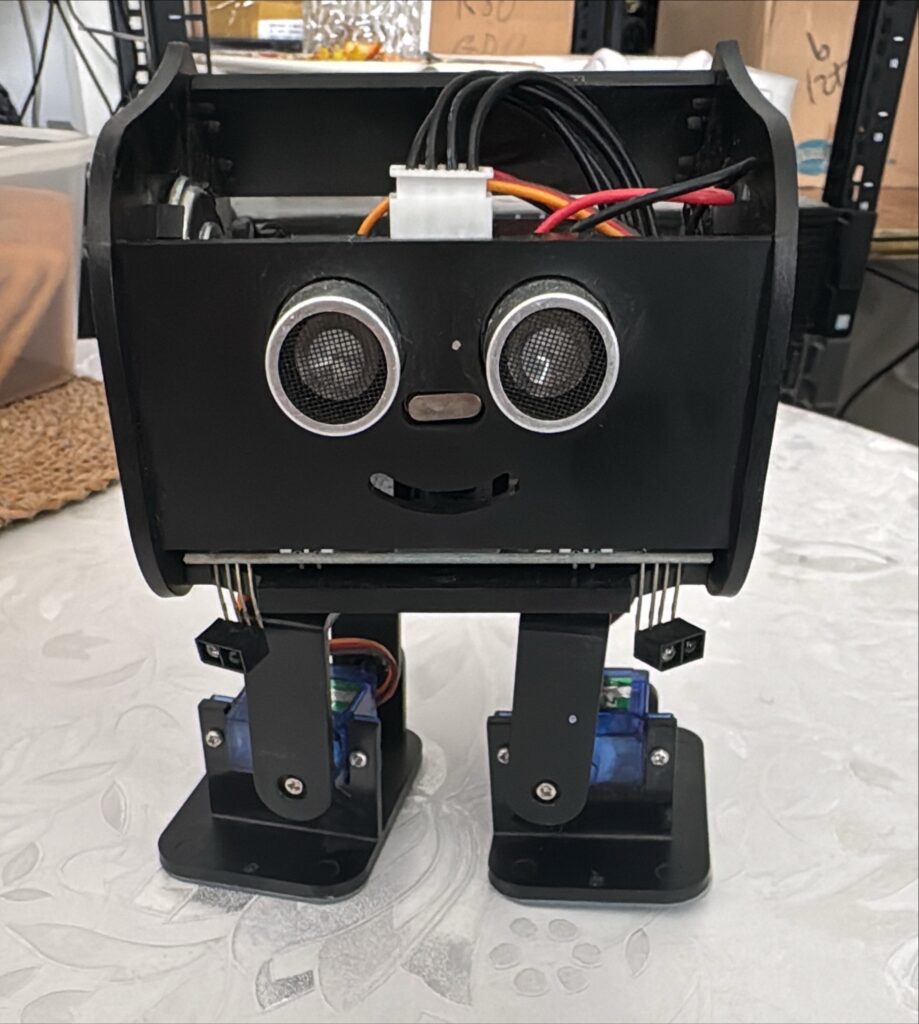
give me your answer please here
Computer science
Computer science this is an area of human activity associated with the processes of converting information using computers, tablet and their interaction with the application environment. b) it is a science that studies your structure and most general properties of information, its search, storage, transmission, and processing using a computer.
MicroPython
Recently, Python Testbed for Federated Learning Algorithms emerged as a low code and generative large language models amenable framework for developing decentralized and distributed applications, primarily targeting edge systems, by nonprofessional programmers with the help of emerging artificial intelligence tools. This light framework is written in pure Python to be easy to install and to fit into a small IoT memory. It supports formally verified generic centralized and decentralized federated learning algorithms, as well as the peer-to-peer data exchange used in time division multiplexing communication, and its current main limitation is that all the application instances can run only on a single PC. This paper presents the MicroPyton Testbed for Federated Learning Algorithms, the new framework that overcomes its predecessor’s limitation such that individual application instances may run on different network nodes like PCs and IoTs, primarily in edge systems. The new framework carries on the pure Python ideal, is based on asynchronous I/O abstractions, and runs on MicroPython, and therefore is a great match for IoTs and devices in edge systems. The new framework was experimentally validated on a wireless network comprising PCs and Raspberry Pi Pico W boards, by using application examples originally developed for the predecessor framework.

BUSINESS COMPUTING
The BSc (Hons) Business Computing and IT course is a perfect choice for those who want the ability to form a bridge between the fields of technology and business. Over four years, the course will mould you into a future ICT practitioner equipped with a good range of relevant technical skills and great knowledge of business systems and structures.
8 Ways to Make Your Business’s Computing Eco-Friendly
- Investing in energy-efficient equipment is one of the easiest ways to reduce your carbon footprint. IT equipment, such as hardware and servers, contributes massively to energy consumption and harms the environment — not to mention a small business’s bottom line. On-site equipment is typically overprovisioned, resulting in an abundance of inefficient.
5 Ways Technology Can Reduce The Environmental Impact of Your
-
- Purchase ENERGY STAR office equipment. We now have the technology to design energy efficient electronics that use up to 75% less electricity than standard equipment.
- Switch to renewable energy. Green energy was once an inaccessible option for many businesses due to costs and availability, but that’s no longer the case.
- Go paperless. Reducing paper waste is what technology does best. Documents that we once had to print and store in filing cabinets can now be filed online in secure, easily searchable cloud-based data storage systems.
- Buy a smart thermostat. Not everything needs to be connected to the internet but for some every
business Computing
business computing, you will learn how computing and information systems fit into business structures and functions, and how computer systems are developed.
Business Computing and IT course is a perfect choice for those who want the ability to form a bridge between the fields of technology and business. Over four years, the course will mould you into a future ICT practitioner equipped with a good range of relevant technical skills and great knowledge of business systems and structures.
What can I do with a BSc Business Computing?
On successfully graduating from this BSc Business Computing, you will have gained an array of important transferable skills, including in: project management and organisational skills. database development. If you are ambitious to study further, you may progress from this course to our MSc Advanced Computing or MSc Computer Science.
benefits of eating vegetables
Adriana

Vegetables are among the healthiest and most nourishing foods, as you may already be aware. They contain a lot of fiber, a kind of carbohydrate that facilitates digestion. Because fiber slows down how quickly your body digests meals, it keeps blood sugar levels constant and helps you feel full for longer. 8. Vegetables are rich in nutrients.
stay healthy!!!
Past or Future
look at the picture!!!

The image on the left, with its weathered stone and worn steps leading to a mysterious doorway, evokes a sense of history, of a world long past. It’s a place that has witnessed countless stories and held secrets for centuries. I imagine a group of archaeologists carefully excavating the site, piece by piece, to understand the lives of those who came before us. This discovery is a journey into the past, a reconstruction of forgotten knowledge.
The image on the right, an astronaut floating in the blackness of space, represents the cutting edge of human endeavor. The intricate details of the spacesuit and the reflection in the helmet visor speak of advanced technology and the boundless human spirit of exploration. This discovery is a leap into the unknown, a search for new frontiers and a deeper understanding of our place in the cosmos.
When you see the past, symbolized by the ancient ruins, you realize it is a fixed point in time. We can study it and learn from it, but we can never change or return to it. It’s a reminder that every moment we experience is fleeting and will soon become a part of that unchangeable history.
Similarly, when you look at the future, represented by the astronaut venturing into the unknown, you are faced with uncertainty. The future is a realm of possibilities, but also one of unpredictable outcomes. We can plan for it and dream about it, but we can never truly know it until it arrives.
I think!!!!!!!
In my opinion the present is the only time we have. It’s the only moment where we can act, make choices, and have a tangible impact. The present is where we apply the lessons from the past and lay the groundwork for the future.
can you give me your opinion after reading my opinion.
Robotics with AI
The combination of robotics and Artificial Intelligence (AI) is transforming various industries and aspects of daily life. AI significantly enhances a robot’s capabilities, moving them beyond pre-programmed tasks to intelligent, adaptive, and autonomous systems.
Here are some key aspects of robotics with AI:
1. Enhanced Capabilities through AI:
Perception and Understanding: AI, particularly computer vision, allows robots to “see” and interpret their surroundings. They can recognize objects, identify obstacles, understand complex scenes, and even analyse human emotions through facial expressions and tone of voice. This is crucial for navigation, object manipulation, and safe interaction.
Navigation and Autonomous Decision-Making: AI enables robots to independently navigate complex environments, making real-time decisions based on sensor data (cameras, LiDAR, ultrasonic sensors). They can adapt to dynamic conditions, predict the movement of dynamic obstacles, and adjust their paths accordingly.
Learning and Adaptation: Machine learning (ML) and deep learning (DL) empower robots to learn from experience. They can analyse data, identify patterns, and refine their actions over time, continuously improving performance without explicit reprogramming. This is evident in tasks like assembly, quality control, and even in optimizing fleet movements for logistics (e.g., Amazon’s DeepFleet).
Human-Robot Interaction (HRI): AI, especially Natural Language Processing (NLP) and generative AI, allows robots to understand and respond to human speech and gestures. This facilitates more intuitive and collaborative interactions, making robots safer and more effective when working alongside humans (cobots).
Complex Task Execution: AI allows robots to perform highly detailed and intricate tasks that would be impossible with traditional coding. This includes precise surgical procedures, delicate object manipulation, and inspection for defects.
2. Applications of AI in Robotics:
AI-powered robots are being deployed across a wide range of sectors:
Manufacturing: From automated assembly and quality control to welding and material handling, AI robots boost productivity, efficiency, and accuracy. Collaborative robots (cobots) work safely alongside human workers.
Logistics and Warehousing: Autonomous mobile robots (AMRs) powered by AI navigate warehouses, transport goods, and optimize routes, leading to faster delivery and reduced operational costs.
Healthcare: Robots assist in precise surgical procedures, provide patient care and rehabilitation, monitor health conditions, and even deliver medicine to remote areas (e.g., drones).
Agriculture: AI robots can accurately weed, fertilize, tackle disease, and harvest crops, even delicate ones like strawberries, while collecting detailed farm data.
Exploration and Hazardous Environments: Robots can operate in dangerous or inaccessible areas, such as inspecting infrastructure, assisting in disaster relief (e.g., “vine robots” for search and rescue), or monitoring high-risk industrial sites.
Autonomous Vehicles: Self-driving cars heavily rely on AI for perception, navigation, and decision-making in complex traffic environments.
Service and Entertainment: Robots are appearing in customer service roles, entertainment, and even as companions in smart homes.
3. Future Trends:
The future of AI in robotics promises even more advanced and autonomous systems:
Physical AI: Robots will increasingly train themselves in virtual environments and learn from experience, leading to more adaptable and robust systems. This is akin to a “ChatGPT moment” for physical robotics.
Artificial General Intelligence (AGI): While still a long-term goal, AGI aims for robots to possess human-like intelligence, capable of learning from experience and applying knowledge across entirely new situations.
Neuromorphic Computing & Brain-Machine Interfaces: These technologies could make robots more energy-efficient, adaptable, and capable of advanced decision-making, potentially seamlessly integrating AI with human cognition.
Embodied AI: Combining perception, reasoning, and movement, embodied AI will lead to more interactive and versatile robotic assistants.
Cloud Robotics: Robots will increasingly leverage vast AI models and real-time data from the cloud for improved learning and performance.
Advanced Humanoid Robots: With continuous advancements in AI, humanoid robots will become more intelligent, responsive, and versatile, finding applications in various fields from social care to industrial tasks.
4. Ethical Considerations:
The rapid advancement of AI in robotics also brings important ethical considerations:
Job Displacement: Automation of tasks by AI robots could lead to job losses, particularly in repetitive or easily automated sectors.
Safety and Security: Malfunctioning or poorly designed robots pose risks to human safety. Ensuring robust safety protocols and cybersecurity is paramount.
Accountability and Responsibility: Determining who is responsible when an AI-powered robot makes a mistake or causes harm is a complex legal and ethical challenge.
Bias and Fairness: AI systems are trained on data, and if that data is biased, the robot’s decisions can perpetuate or even amplify those biases. Ensuring diverse and representative training data is crucial.
Privacy and Data Protection: Robots collect vast amounts of data about their environment and human interactions, raising concerns about privacy and how this data is managed and secured.
Human Oversight and Autonomy: It’s important to ensure that AI systems do not displace ultimate human responsibility and accountability, and that robots respect human autonomy.
Social Isolation and Dehumanization: Over-reliance on social robots, particularly among vulnerable populations, could potentially exacerbate social isolation or lead to a dehumanization of care.